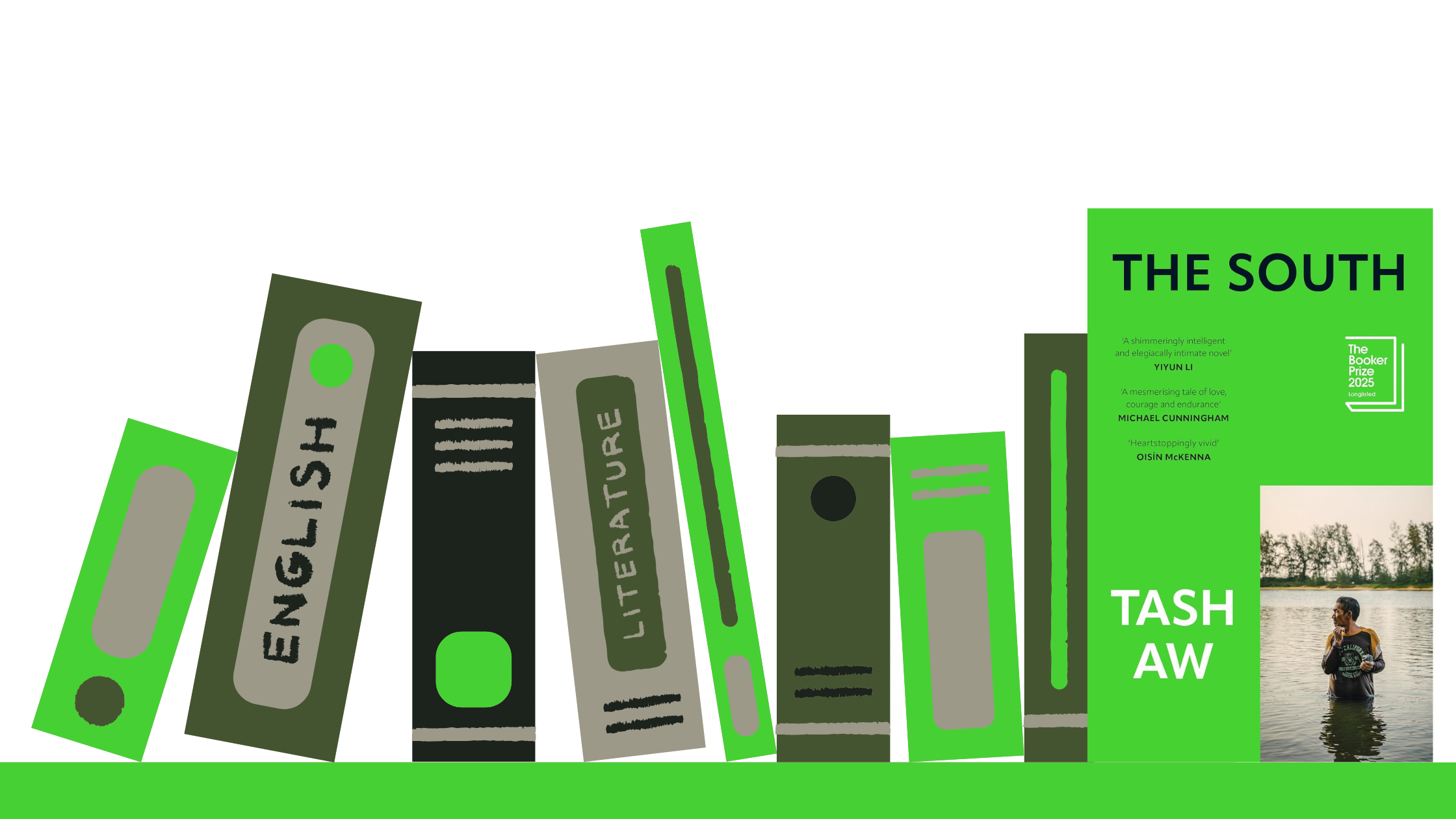
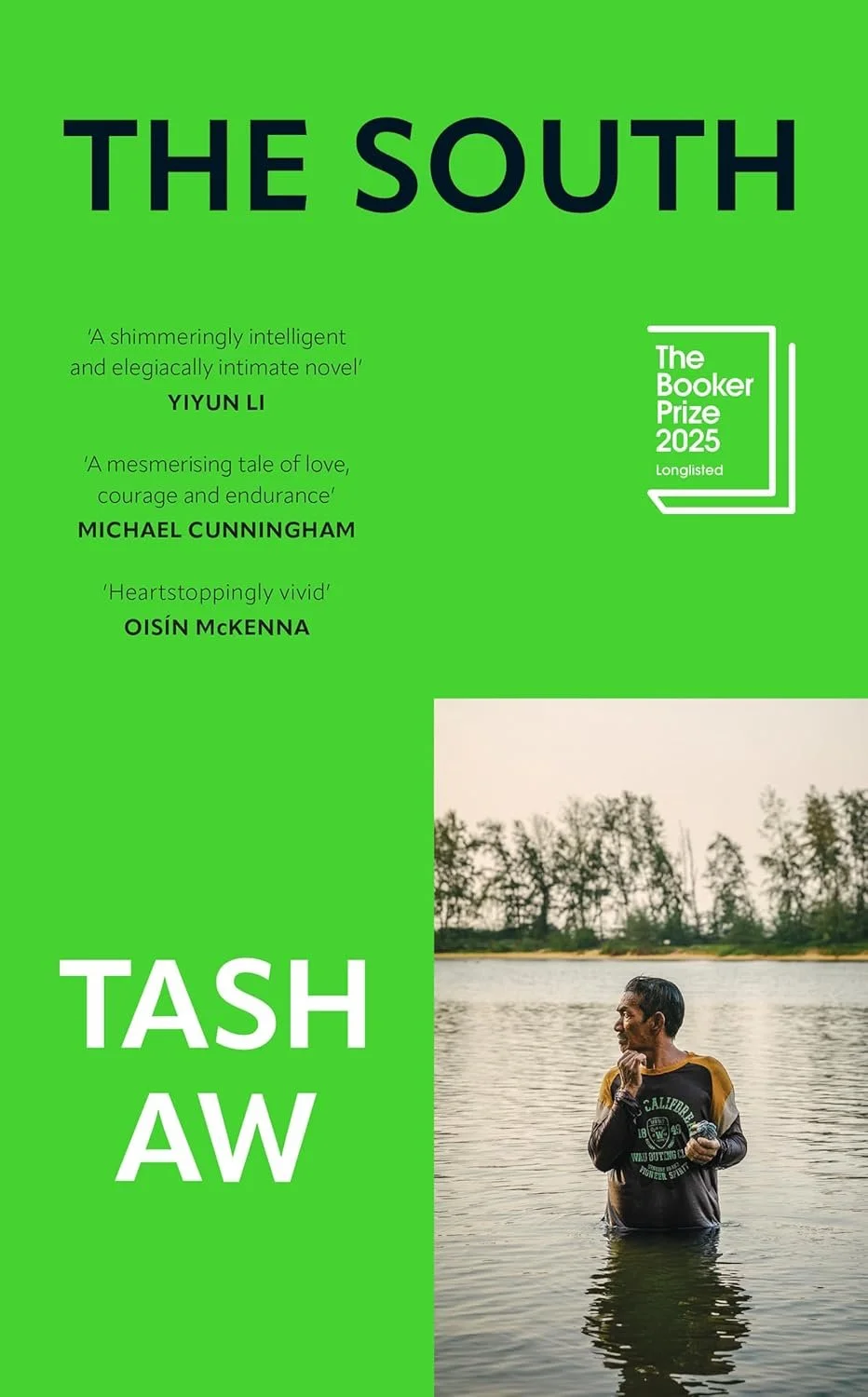
The South
“But at that age, what does either of them really know about time?”
Title: The South
Author: Tash Aw
Published: February 2025
A radiant novel of longing that blooms between two boys over the course of one summer—about family, desire, and what we inherit—from celebrated author Tash Aw.
When his grandfather dies, a boy named Jay travels south with his family to the property he left them, a once flourishing farm that has fallen into disrepair. The trees are diseased, the fields parched from months of drought.
Still, Jay’s father, Jack, sends him out to work the land, or whatever land is left. Over the course of these hot, dense days, Jay finds himself drawn to Chuan, the local son of the farm’s manager, different from him in every way except for one.
Out in the fields, and on the streets into town, the charge between the boys intensifies. Inside the house, the other family members confront their own regrets, and begin to drift apart. Like the land around them, they are powerless to resist the global forces that threaten to render their lives obsolete.
At once sweeping and intimate, The South is a story of what happens when private and public lives collide. It is the first in a quartet of novels that form Tash Aw’s masterful portrait of a family navigating a period of great change—a reimagined epic for our times.
Discussion Questions
Many of the characters feel trapped whether by family expectations, poverty, social class, geography, sexuality, or tradition. Which character did you find yourself sympathising with most, and why?
The novel opens with Jay looking back on a pivotal summer from adulthood. How does the passage of time shape the way the story is told? Can we ever truly remember events as they happened, or are memories always a form of storytelling?
Jay and Chuan's relationship sits at the heart of the novel. How did you interpret the differences in what each boy wanted from the relationship? Did they ultimately represent different ideas of freedom, love, or escape?
Several characters dream of a different life: Chuan wants to leave, Jay wants to belong, Sui Ching wants ownership and autonomy, while others long for stability. What does the novel suggest about the relationship between freedom and responsibility?
The farm is much more than a setting. What does it come to represent for different characters throughout the novel? Why do you think so many of the story's tensions revolve around this piece of land?
Sui Ching emerges as one of the novel's most compelling characters. How did your feelings towards her evolve throughout the story? What do you think the inheritance of the farm means to her personally?
The novel is set during the 1997 Asian Financial Crisis, a period of significant economic uncertainty. How does the backdrop of social and economic change influence the characters' choices and futures?
Questions of legitimacy and inheritance run throughout the novel, particularly through Jack and Fong's relationship. How do family secrets and generational decisions continue to shape the lives of the younger generation?
One reviewer described the novel as being about "the yearning to live your life as you wish." Which characters succeed in pursuing that desire, and which remain imprisoned by expectation or circumstance?
The South explores what it means to be an outsider in multiple ways through class, race, sexuality, geography, and family dynamics. Which forms of "otherness" felt most significant in the novel, and why?
Lina argues that love should lead to freedom rather than obligation. Do you agree? How does the novel challenge or reinforce traditional ideas about love, duty, sacrifice, and family loyalty?
This is the first book in a planned quartet. By the final page, which character's future are you most curious about, and what questions do you hope the next novel will answer?